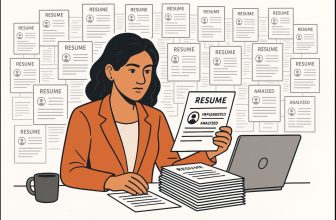
The Indian job market is undergoing rapid transformation. McKinsey Global Institute estimates that by 2030, up to 45 million jobs in India could be automated or significantly altered by AI and advanced technologies. Routine tasks in IT services, BPO, manufacturing, accounting, and even entry-level coding are disappearing fastest.
What remains irreplaceable are human abilities that AI cannot yet replicate at scale: judgment under ambiguity, emotional resonance, ethical decision-making, and the capacity to collaborate across diverse teams. Research from World Economic Forum (Future of Jobs Report 2023 & 2025 update), LinkedIn Workplace Learning Reports, and Indian-specific studies by NASSCOM and TeamLease consistently place the following 13 soft skills at the top of employer wish-lists in 2025.
The 13 skills below are supported by well-established research and explain why employers across India prioritize them.
1. Cognitive Flexibility:
Psychology describes cognitive flexibility as your ability to shift attention, adopt new viewpoints, and reorganize mental frameworks. Studies show that high flexibility predicts faster adaptation to unfamiliar tasks.
- AI excels at single-task optimization; humans must pivot when client requirements change overnight (common in Indian IT/ITeS). Teams that score high on cognitive flexibility are 37 % faster at solution redesign (Deloitte Human Capital Trends).
2. Sense-Making in Ambiguity: Handling Confusion & Uncertainty
Karl Weick’s theory of sensemaking, creating rational accounts from chaotic data. Many times no one knows the full picture, rules are unclear, data is missing. You still make a sensible decision and move forward.
- Indian startups operate in VUCA environments. Leaders need people who can extract signal from noise when market regulations or client briefs are unclear.
3. Empathetic Communication – Make People Feel Heard
You don’t just hear words, you understand the feeling behind them and reply in a way that calms the person.
- 68 % of Indian hiring managers say “poor stakeholder management” is the top reason new hires fail (LinkedIn India, 2024). With distributed global teams, the ability to read tone on a video call and respond appropriately is non-negotiable.
4. Growth Mindset – “I Can Learn Anything”
You believe skills are built by practice, not born with you.
- Employees who believe abilities can be developed learn new AI tools (Copilot, Gemini, Claude, internal LLMs) 2.3× faster than fixed-mindset peers (Microsoft Work Trend Index).
5. Ethical Judgment under Pressure – Say NO When Needed
You choose the right thing even if it makes the boss unhappy or delays the project.
- Data-privacy scandals and AI-bias incidents are rising. Companies like TCS, Infosys, and new-age fintechs need people who will push back when asked to “move fast and break regulations.”
- RBI, SEBI, GDPR, US clients everyone is checking data privacy and AI ethics now.
6. Cross-Cultural Humility:
You accept that your Indian way may not be the best way for US/German/Japanese clients.
- Indian GCCs serve clients in 15-20 countries. Arrogance or unconscious bias destroys client relationships faster than technical incompetence.
7. Self-Learning Superpower
You decide what to learn, make your own plan, and finish it, no teacher, no boss forcing you.
- Formal training budgets are shrinking; 74 % of Indian employees say they must upskill on their own (PwC Hopes & Fears 2024). Those who can set goals, monitor progress, and seek feedback thrive.
8. Grit & Resilience – Never Give Up
Keep working on big goals for months/years even after 10 failures.
- Layoffs, funding winters, and project cancellations are routine. Grit predicts long-term retention better than IQ or pedigree in Indian startups (IIM Bangalore study).
9. Solving Real Problems (Complex Thinking)
Problems where no textbook answer exists, too many moving parts (price, language, internet, trust).
- AI solves complicated problems; humans must navigate complex ones, e.g., “How do we enter Tier-2 cities when regulations, language, and payment habits differ wildly?”
10. Influence Without Being the Boss
Make seniors and peers agree with your idea without using power.
- Indian organizations are flattening hierarchies. Getting a senior stakeholder in Germany or a peer in Hyderabad to adopt your idea requires influence, not designation.
11. Active Listening That Wins Hearts
- Most conflicts in Indian workplaces arise from “feeling unheard” during requirements gathering or sprint planning.
12. Creative Divergence + Convergence:
- Generative AI can produce 100 ideas in seconds; humans must ask the right prompting questions and then converge on the one idea that fits Indian price sensitivity, infrastructure, and cultural context.
13. Lifelong Curiosity:
Always stay excited to learn new things – ask “How?” and “Why?” like a child.
- The half-life of technical skills is now <2.5 years (World Economic Forum). Curiosity is the only sustainable competitive advantage left.
How These Skills Protect Your Career in an AI-Centric Workspace
Key findings from MIT, Oxford, PwC India, NASSCOM, and ILO agree on a core pattern:
- Tasks involving empathy, ambiguity, negotiation, contextual judgment, and social coordination remain least automatable.
- Employees with stronger non-routine cognitive skills show higher salary resilience in labour-market data.
- Teams that combine AI for routine tasks and humans for judgment tasks outperform fully automated systems.
In India, sectors like IT services, consulting, healthcare, finance, logistics, and digital marketing already reflect this shift. Employers prioritise people who excel at interpreting context and coordinating people rather than simply executing defined tasks.
Final Note
Your IIT/IIM degree or Leetcode score gets you the interview. These 13 skills decide whether you keep the job, and grow into the roles that AI will never take.
You strengthen your long-term career when you develop skills linked with decision making, emotional intelligence, attention management, and adaptable thinking. AI accelerates processes, but your ability to navigate relationships, uncertainty, and cross-functional collaboration will continue to determine your value in India’s job market.